
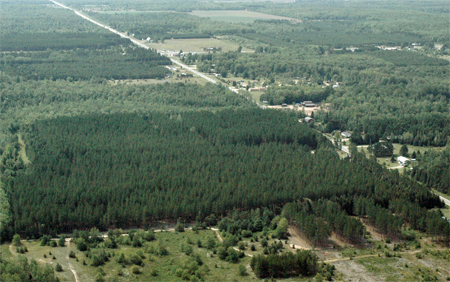
If you own or are considering the purchase of Michigan woodlands, a scientific evaluation can be made to identify your forest management options.
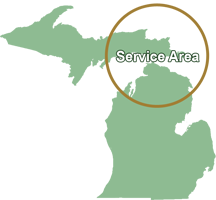
Before you consider a timber harvest of your Upper Peninsula forest, it is essential that you have written management plan.
A well thought out forest management plan should describe your property by stand or timber type.
We help you improve and maintain soil and water quality, and reforestation practices when needed.
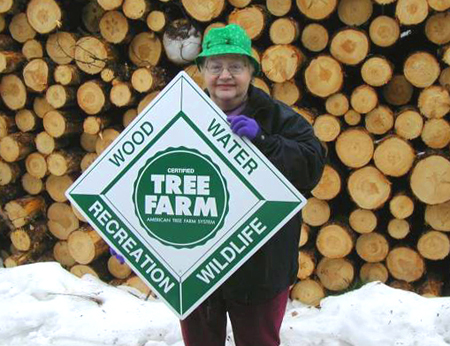
The American Tree Farm System has established a relatively new program called the American Tree Farm System, Group Certification Process.
If you are interested in long-term sustainable forest management for your property, this is the program for you.
The natural woodlot is an apparently simple place. Its esthetic elements don't appear to be complex; clean water, timber, wildlife.
Forest care benefits both the woodland property and its owner by appropriately maximizing the kind of healthy, balanced growth that facilitates both land and habitat improvement.


| Upper Peninsula Forest Management, UP Forest Management, UP Timber Marketing Specialists, Upper Peninsula Tree Farm Group |
Grossman Forestry Company
|
 |
 |
Upper Peninsula Forest Management Plans
|
|
Forest Stewardship Program: Michigan Forest Stewardship Video |
|
Who Is Eligible? |
 |
Small Woodlot Management |
| Upper Peninsula Stewardship Press Release: |